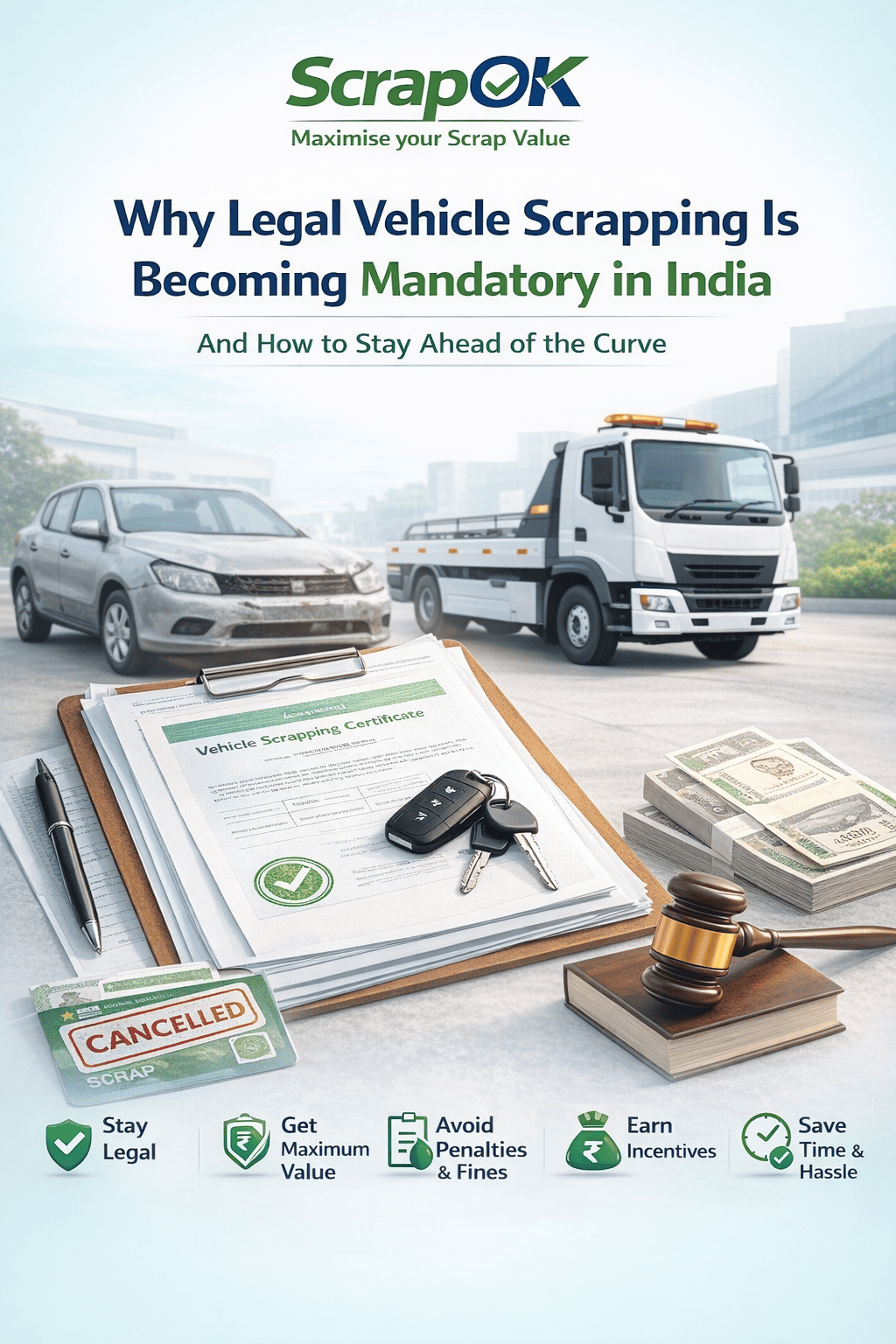
India isn’t exactly known for smooth bureaucratic transitions, but the shift toward mandatory, legal vehicle scrapping is one of the rare moments where the policy actually aligns with reality. Old, non-compliant vehicles are killing fuel efficiency, crowding urban spaces, increasing emissions, and putting owners at risk of fines they definitely don’t want.
And because the government isn’t slowing down on enforcement, the smart move is to get ahead of the curve instead of waiting for a notice to appear in your mailbox like a bad surprise.
Here’s why legal scrapping is no longer optional and how ScrapOK fits into the operational workflow.
1. The Policy Shift Isn’t Slowing Down
The push toward Registered Vehicle Scrapping Facilities (RVSFs) is deliberate. The government wants a verified, traceable system for end-of-life vehicles. Translation: backdoor scrapping, shady yards, and undocumented disposals are dead ends now.
The new compliance ecosystem includes:
- Mandatory RC deregistration
- Valid scrap certificates
- Environmental compliance
- Verified dismantling channels
If even one step in that chain is missing, you’re looking at penalties and paperwork that spirals out of control faster than you’d like.
2. The Real Reason Old Vehicles Are Becoming Financial Liabilities
Your old car isn’t just outdated. It’s becoming a cost center:
- Road taxes increase
- Fitness test failures are inevitable
- PUC compliance becomes painful
- Fuel efficiency drops
- Resale value hits rock bottom
And with low-grade scrap yards offering pocket-change prices, the value erosion becomes even worse.
RVSFs are now the only reliable route to unlock formal scrap value.
3. The Legal Route Pays More Than the “Shortcut” Route
Everyone loves shortcuts until the fallout shows up. Illegal scrapping has two classic outcomes:
- No documentation
- No certificate
- No deregistration
- Zero accountability
And of course, zero value optimization.
RVSFs, on the other hand, offer:
- Standardized scrap valuation
- Government-verified process
- Higher payout (because transparency actually helps here)
- A certified record
This is one of those rare cases where the official path genuinely produces better results.
4. Why ScrapOK Streamlines the Entire Process
The scrapping workflow is messy if you attempt it alone. Comparing RVSF quotes, coordinating pickup, filing paperwork, deregistering the RC, and ensuring compliance is basically a full-time job.
ScrapOK resolves that operational chaos by:
- Comparing multiple RVSF quotes instantly
- Handling documentation end-to-end
- Coordinating legal RC deregistration
- Managing pickup and logistics
- Ensuring maximum scrap value across verified vendors
It’s not just a “scrap service.” It’s a structured compliance pipeline for people who don’t want to lose time or money.
5. The Scrap Certificate Is Your Proof of Protection
This certificate is not decorative. It is:
- Your defense against future liabilities
- Your guarantee that the vehicle is deregistered
- Your eligibility for potential government incentives
- Your protection from misuse of old plates or chassis numbers
Skipping the certificate is asking for trouble.
6. The Bottom Line: Scrapping Isn’t Just Smart. It’s Strategic.
India’s scrapping framework is moving fast. Compliance is tightening. Cities are enforcing age limits. Insurance companies aren’t underwriting ancient vehicles. And the resale market isn’t rewarding nostalgia.
The smart approach:
- Scrap legally
- Scrap efficiently
- Scrap with documentation
- And yes, scrap through a process that actually gives you a fair payout
ScrapOK exists so you don’t wander through the administrative maze by yourself.
If someone wants the maximum scrap value with zero operational friction, the choice is obvious.

